Hytale Gameplay: Exploration, Combat, Building, and Progression
A practical guide to the Hytale gameplay loop, what to do first, and how exploration connects to crafting, combat, dungeons, friends, and mods.
Quick answer
Hytale gameplay is a sandbox loop: explore, gather, improve equipment, manage enemies and hazards, then use the result to travel farther or build a better base. Early Access can change the balance, so this guide focuses on useful player decisions rather than a final 1.0 feature list.
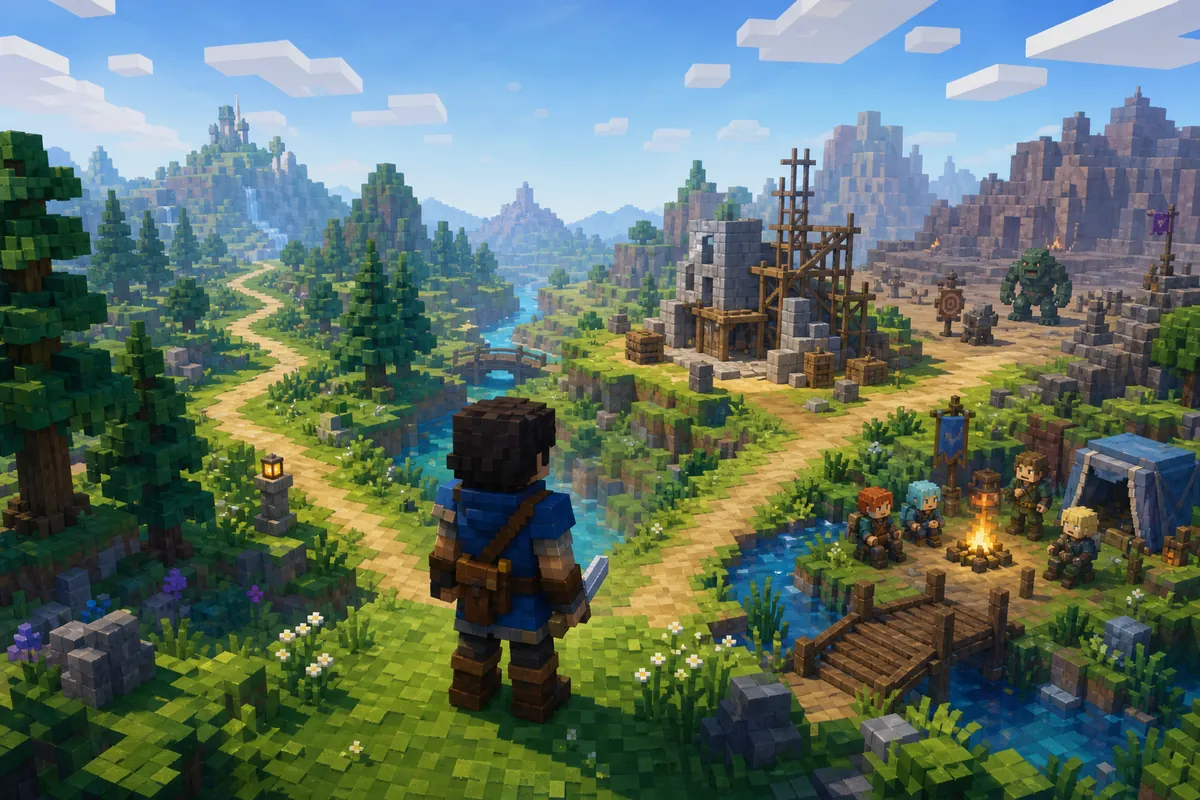
What is Hytale gameplay like?
Hytale gameplay combines an open-ended sandbox with adventure-game decisions. You are not following one required route every minute. You choose whether the next goal is a safer base, better equipment, a new landmark, a resource run, a dungeon attempt, or time with friends.
That freedom can make a first session feel vague. Travel with a purpose, bring back materials, and turn them into a safer or more capable next step. Exploration creates options; crafting and building make them persistent.
Treat feature descriptions as build-sensitive: updates, server settings, and Early Access branches can change availability or balance.
The core Hytale gameplay loop
Understand Hytale gameplay as a repeating loop, not a checklist. Each activity should make the next one easier, safer, or more interesting.
Break it into four decisions: choose a reason to move, collect what supports it, prepare for risk, and return with something that improves home, tools, knowledge, or access.
| Activity | Player decision | Useful result |
|---|---|---|
| Explore | Choose a landmark, resource, or route. | New information and possible goals. |
| Gather | Take materials that support the next task. | Inputs for tools, shelter, or upgrades. |
| Prepare | Pick equipment, food, and a safe fallback. | More control over risk and distance. |
| Build or fight | Invest in a base or face a challenge. | Progress that changes the next trip. |
A useful first Hytale gameplay session
A first session should teach you how the world answers your actions. Learn movement, collect basic materials, find a defensible pause point, and mark discoveries for a later trip.
The goal is to leave knowing where you are, what you can make, what threatens you, and which short objective is worth trying next.
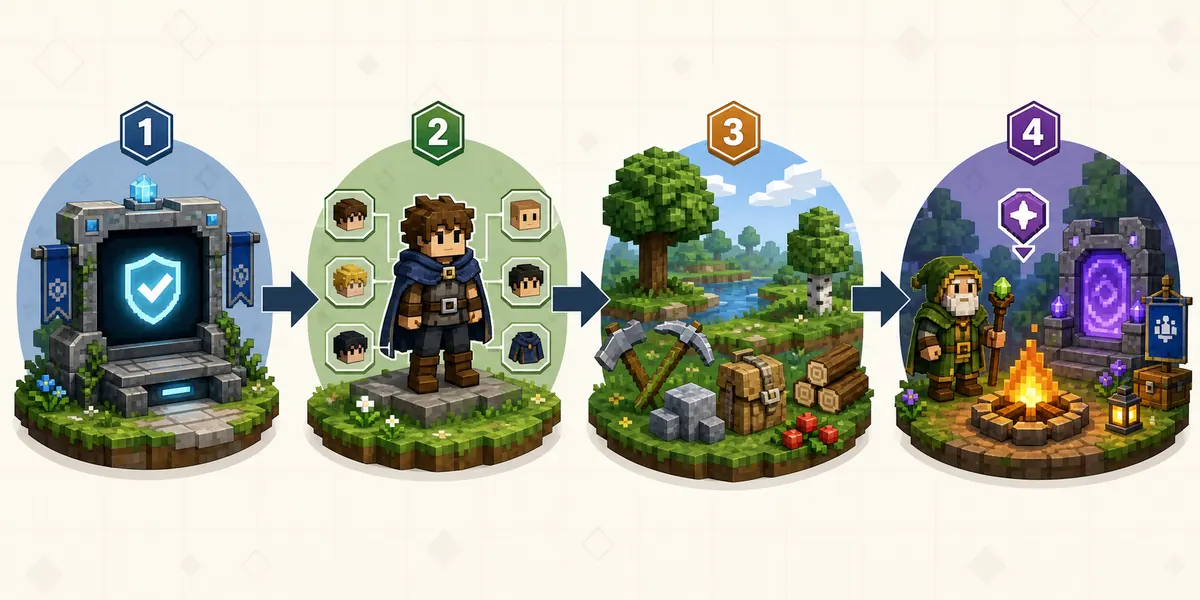
- Orient yourself — Look for terrain, water, shelter, and a route back before running far.
- Collect a small reserve — Gather basic materials without emptying every nearby resource node.
- Create a fallback — Choose a camp or base location where a failed trip will not erase all progress.
- Test one risk — Try a small combat encounter, cave, or landmark before committing to a long expedition.
- Set the next goal — Write down one material, location, recipe, or social task for the next session.
This rhythm keeps every trip purposeful, safe enough to learn from, and useful for the next one.
Exploration and world discovery
Exploration is more than walking toward a landmark. Travel teaches you which places are safe, where resources repeat, where enemies appear, and which routes are practical for bringing materials home.
Use a short loop first: follow one direction, record a landmark, collect a sample, and turn back before supplies or attention run out.
| Discovery | What to record | Why it helps |
|---|---|---|
| Terrain | Slopes, water, paths, and cover. | Makes return routes easier to read. |
| Resources | Where useful materials cluster. | Reduces random searching later. |
| Landmarks | Ruins, caves, structures, and unusual areas. | Creates clear goals for future trips. |
| Threats | Enemies, hazards, and time pressure. | Lets you prepare instead of improvising. |
Gathering, crafting, and building
Gathering matters when it changes what you can do. Before collecting everything, ask what the material supports: a tool, shelter, storage, a repair, or an experiment.
Building is not only decoration. A good base shortens travel, separates experiments from valuable storage, and gives groups a place to organize. Start small and expand when the location proves useful.
| Goal | Good early question | Practical payoff |
|---|---|---|
| Tools | What task will this item make faster? | More efficient gathering and travel. |
| Shelter | Can I pause or recover here? | A safer return point. |
| Storage | Which items deserve a permanent place? | Less inventory friction between trips. |
| Workshop | Which recipe or experiment needs a station? | A clear next step instead of aimless hoarding. |
When crafting feels confusing, choose the recipe that removes the bottleneck blocking your next activity.
Combat and dungeon risk
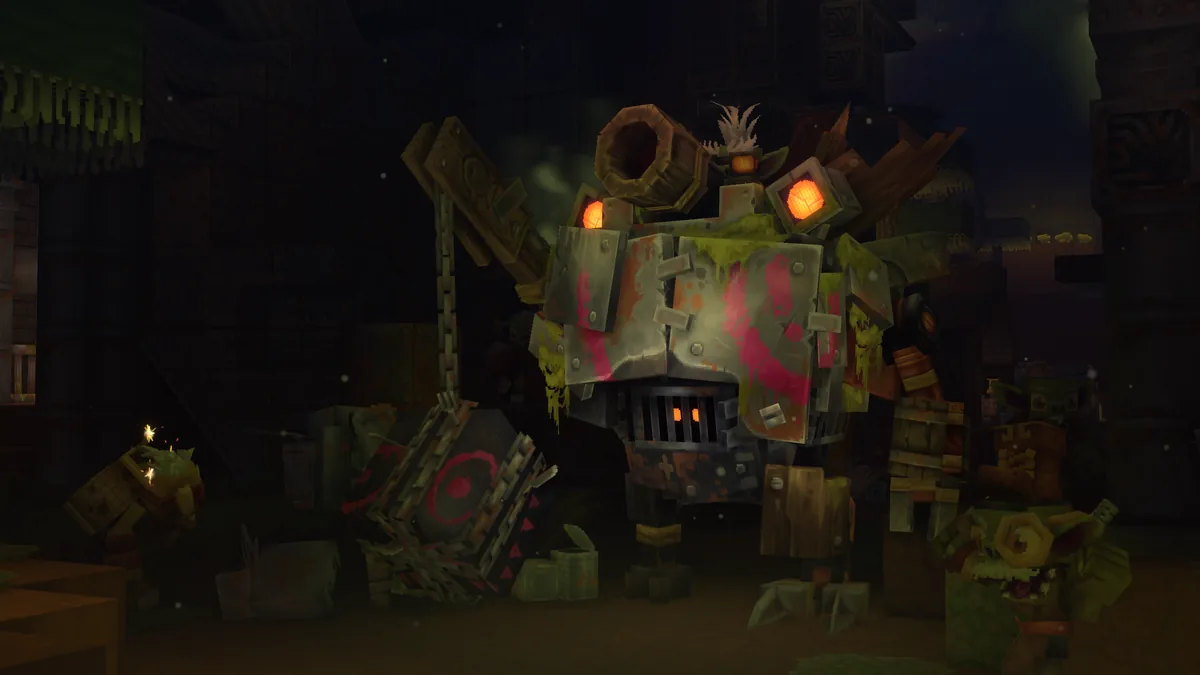
Combat gives exploration a cost. An unknown cave or dungeon is a decision about equipment, visibility, escape routes, supplies, and what you can afford to lose.
Treat difficult areas as tests. Scout the entrance, identify a retreat path, carry replaceable items, and leave when new information is worth more than another risky room.
| Before entering | During the attempt | After the attempt |
|---|---|---|
| Equipment | Check tools, food, healing, and spare space. | You can continue without a forced return. |
| Position | Notice exits, corners, light, and height changes. | You keep options when enemies appear. |
| Objective | Choose exploration, loot, or information. | You know when the run is complete. |
| Recovery | Plan where to regroup or store finds. | A failed fight does not erase the whole session. |
The key combat lesson is knowing when preparation, positioning, and retreat matter more than pressing forward.
Friends, servers, and mods
With friends, Hytale gameplay becomes a coordination problem as much as a combat or building problem. Decide who explores, who gathers, who maintains storage, and where shared projects live.
Servers add connection, permissions, backup, version, and host-rule constraints. Read current server guidance before treating a solo routine as a multiplayer rule.
- Shared goals — Choose one group project before splitting into separate objectives.
- Clear storage — Use labels or agreed locations so a resource run helps everyone.
- Safe experiments — Test risky changes away from the main base or keep a reversible backup.
- Separate mod tasks — Check the current mod guide and compatibility notes before mixing add-ons into a shared world.
Pair this overview with the site's multiplayer, server setup, and mods guides instead of copying another game's workflow.
What not to assume about Hytale gameplay
Old trailers, fan wikis, and gameplay videos can describe different moments in development. They reveal possibilities, not automatic current guarantees.
Separate announced ideas, tested features, server options, and features available in your installed build.
| Claim type | Safer interpretation |
|---|---|
| Trailer or concept art | Shows direction or atmosphere, not every current mechanic. |
| Community video | Check its upload date, build, and server context. |
| Mod feature | Do not treat it as part of the base game. |
| Old guide | Recheck names, balance, and requirements against official notes. |
How to start Hytale gameplay with a plan
If you are deciding whether the game fits you, begin with the first-hour loop rather than an endgame promise. Can you enjoy exploring, collecting, building a safer base, and choosing the next objective?
Before a longer session, check current system guidance and use the official launcher route. Avoid random APK claims: this article explains gameplay, not an official Android release.
- Check the platform — Confirm that your device and build match the official distribution path.
- Pick one short goal — Use a base, resource, landmark, or friend session as the focus.
- Keep a return route — Do not travel so far that one mistake consumes the whole session.
- Review what changed — At the end, keep the useful discovery and revise the next goal.
A small, repeatable plan makes the sandbox feel deep instead of directionless.
Early Access and gameplay updates
This guide was reviewed on September 9, 2026 and avoids treating a changing feature list as permanent. If a patch changes combat, recipes, servers, or platform support, start with the official announcement.
When a community guide disagrees with the installed build, trust the in-game result and first-party notes.
Bottom line
Hytale gameplay works best when exploration feeds a useful decision. Gather with a purpose, build for the next trip, prepare for combat, and add multiplayer or mods after the base routine is clear.
The feature set can move during Early Access, but the useful question stays stable: what did this trip teach you, and how will the next trip improve?
Hytale gameplay FAQ
References
Reviewed for current Early Access context: September 9, 2026
Related Hytale resources
Use these pages to move from general gameplay understanding to a specific setup, multiplayer, or platform decision.
- Hytale weapons guide — Compare weapon families, stamina, durability, and safer dungeon decisions.
- Hytale beginner guide — Turn the gameplay loop into a practical first-hour checklist.
- Hytale multiplayer guide — Plan friend sessions, connections, and shared-world expectations.
- Hytale mods guide — Separate base-game gameplay from mod installation and compatibility.
- Hytale system requirements — Check the device side before committing to longer sessions.
- Hytale farming guide — Test seeds, soil, water, and a practical small-farm layout.